How to Hire Web and Mobile Developers: What Founders Should Expect

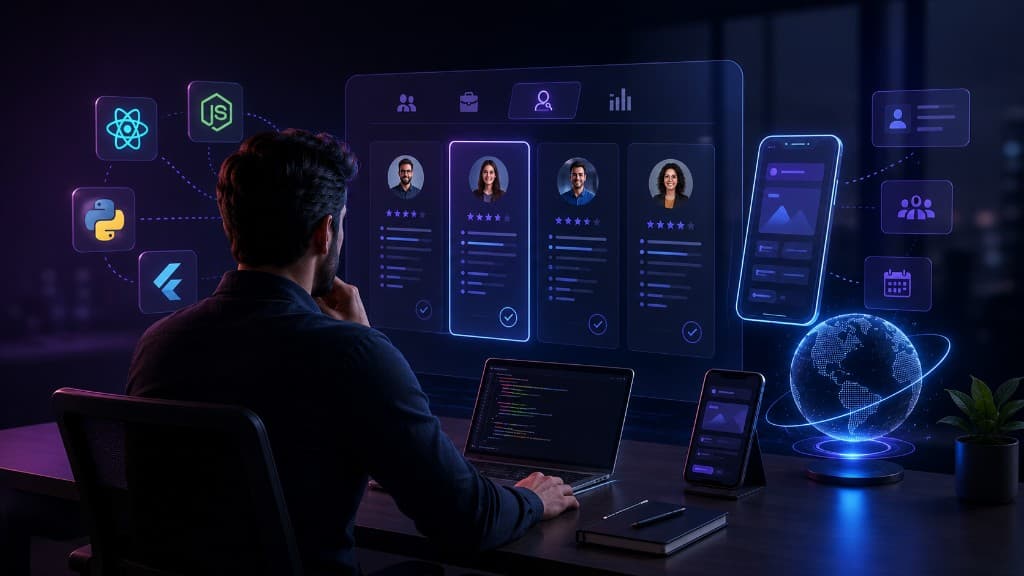
A practical hiring guide for founders choosing a custom web and mobile development partner — discovery, ownership, timelines, AI integrations, and how to evaluate fit before you sign.
What a strong hiring brief looks like
When you hire web and mobile developers, the brief that produces good outcomes is the user problem — not a shopping list of frameworks. Define who the product is for, what “done” means for the first release, which platforms matter (web, iOS, Android, or both), and any hard constraints around budget, compliance, or launch dates.
Stack preferences help, but they are secondary. A partner who leads with blockchain or a standalone AI product before clarifying the product surface is optimizing for their brochure. Practical AI integrations inside the app you ship — assistants, automation, recommendations — should be part of how the product works, not a separate pitch bolted on later.
At Automative Tech we specialize in custom web and mobile development with AI integrations. That positioning matters when you evaluate partners: you want builders who start from the product users touch every day.
Prefer partners who show unfinished work and trade-offs early. Perfect decks often hide the coordination cost you will pay later.
Discovery before estimates
A credible engagement starts with a short discovery: goals, constraints, existing code, compliance needs, and a milestone sketch. Fixed quotes without that context are mostly theater — they force the partner to pad risk or cut corners later.
Expect options with trade-offs: a thinner MVP sooner versus a broader platform later. Good partners explain what you gain and lose at each scope level. We typically kick discovery within a week of a fit conversation and move into build once scope and terms are clear.
Ask how discovery is priced, who runs it, and what artefacts you keep even if you do not proceed. Problem statements, risk notes, and a first-slice plan should survive the handoff into build.
Prefer partners who show unfinished work and trade-offs early. Perfect decks often hide the coordination cost you will pay later.
Ownership, IP, and working style
You should own the repository, environments, and documentation. The people scoping the work should be the people shipping it. Ask how many engineers will touch the project, how communication works week to week, and how knowledge transfer happens at the end.
We stay intentionally compact on purpose: clients work directly with the builders — strategy and fit from leadership, technical direction from the CTO, and day-to-day engineering delivery from the software engineering manager. That is slower to staff than a body shop and usually healthier for product quality.
If a proposal hides the actual builders behind account managers, treat that as a risk signal. Continuity of ownership is one of the strongest predictors of a successful custom build.
Prefer partners who show unfinished work and trade-offs early. Perfect decks often hide the coordination cost you will pay later.
Where AI, blockchain, and products fit
AI integrations belong in the primary roadmap when they improve a core workflow: faster support, smarter search, automation that saves operator hours. They should be designed with latency, cost, and fallback behaviour in mind — not as a demo feature.
Blockchain components and standalone AI products (like Stampvio and MarqueeDesk) are secondary. They belong in the plan when they create clear user or business value. If your roadmap needs on-chain workflows or an AI product conversation, say so early. We will still start from the product users use every day.
Prefer partners who show unfinished work and trade-offs early. Perfect decks often hide the coordination cost you will pay later.
Questions that separate partners from body shops
Before you sign, ask: Who writes the first pull request? Who owns production incidents during launch week? How do you handle scope changes? What does handoff documentation include? Can we speak with the engineers who would actually staff the project?
Also ask for a sample of how they structure milestones and demos. Weekly demos against a staging environment that mirrors production tell you more than a slide deck of logos.
If you are ready to hire a web and mobile partner with practical AI capability, start with a clear problem brief and a short discovery conversation — not a forty-page RFP that nobody reads.
Prefer partners who show unfinished work and trade-offs early. Perfect decks often hide the coordination cost you will pay later.
Make the hiring decision reversible
Treat the first engagement as a reversible bet. Start with a paid discovery or a tightly scoped first slice, keep IP and repositories in your name from day one, and require weekly demos against staging that mirrors production.
If communication, ownership, or quality slip in the first three weeks, you should be able to stop without losing the artefacts. That optionality is how founders hire web and mobile developers without gambling the company on a brochure.
Prefer partners who show unfinished work and trade-offs early. Perfect decks often hide the coordination cost you will pay later.
Ask for the builders, not only the deck
Request a conversation with the engineers who would staff the work. Continuity of ownership predicts outcomes better than logo slides.
Weekly demos, named owners, and repository access in your org are non-negotiable for a healthy custom development partnership.
Prefer partners who show unfinished work and trade-offs early. Perfect decks often hide the coordination cost you will pay later.
“Hire for ownership and product judgment first. Framework fluency without those two traits becomes expensive churn.”
Checklist
- Written problem brief with first-release definition of done
- Platforms and constraints listed (web, iOS, Android, compliance)
- Discovery artefacts and ownership of IP clarified in writing
- Named engineers on the engagement, not only an account lead
- Milestone plan with demo cadence and staging parity
- AI / blockchain needs tagged as primary or secondary explicitly
Bilal Hassan
CEO & Founder
Founder leading company strategy, client relationships, and growth. Keeps engagements aligned with business outcomes so technical work stays tied to what clients need to ship.
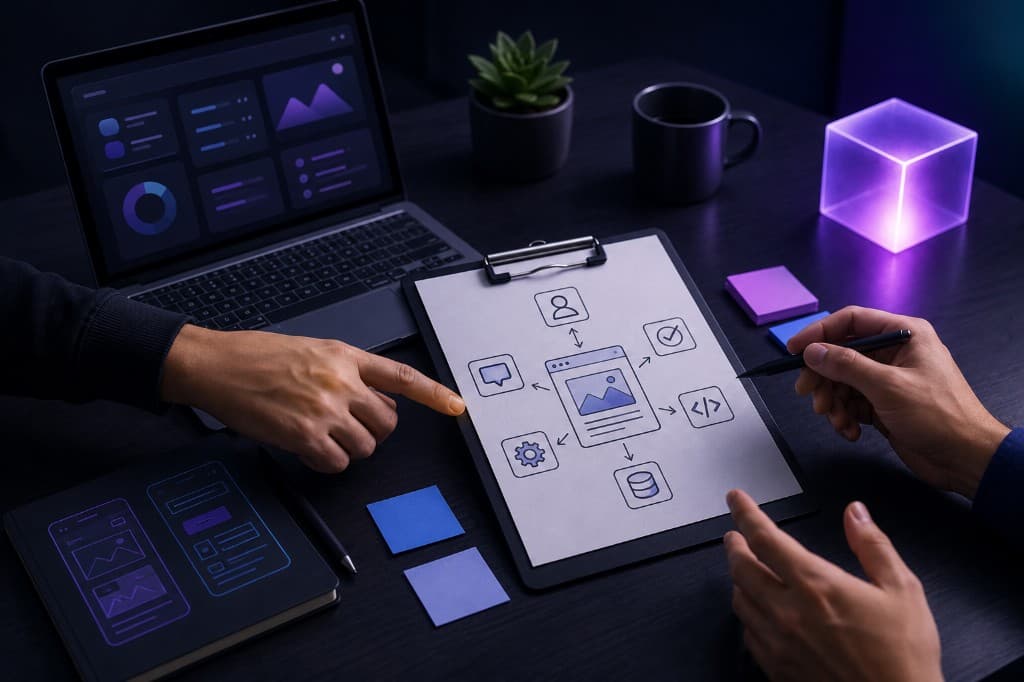


Let's build something
remarkable
Whether you need a web or mobile app with AI integrations, blockchain work, or a conversation about our AI products — tell us what you're building and we'll respond fast.
Blog questions
How we write, how often we publish, and how you can contribute or stay in the loop.
Blogs are written by Automative Tech’s engineering leadership — Muhammad Talha Zubair, Bilal Hassan, and Umar Khalid — based on production web, mobile, AI integration, and blockchain work.
We lead with custom web and mobile delivery with AI integrations — Next.js, React, React Native, Flutter, and LLM features. Selected posts also cover blockchain, AI products, and cloud when they support shipping real products.
A few deep pieces per month. We prioritize substance over cadence.
Yes with attribution and a link back to the original. For syndication, contact us for a simple agreement.
Occasionally, when the author has real production experience. Pitch a short outline via the contact form.
Follow the social links in the footer, or contact us to ask about engineering notes updates.