Custom Next.js SaaS Development: Architecture Checklist That Ships

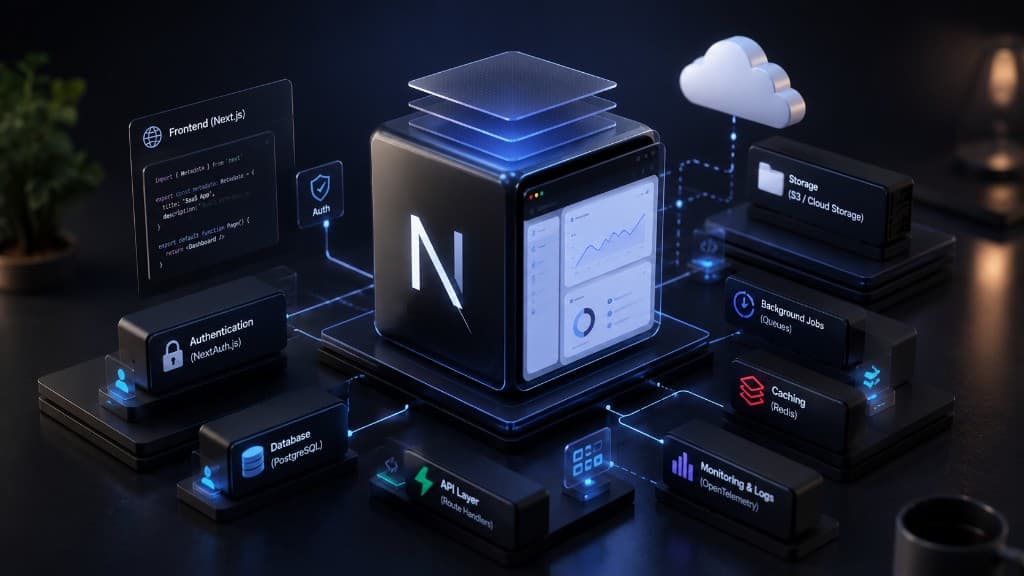
A practical checklist for shipping a custom SaaS web app with Next.js and TypeScript — auth, multi-tenancy, rendering strategy, and delivery habits that keep the product shippable.
Start from the product surface
Custom web development fails when teams jump to infrastructure before the user journey is clear. For SaaS, map the critical paths first: signup, the core job-to-be-done, billing or access gates, and the admin views that keep the business running.
Next.js and TypeScript are our default for this work because they keep UI, API routes, and type safety in one delivery loop. The stack is a means — the product surface is the contract with your users.
Founders evaluating a SaaS development company should ask how partners translate that surface into milestones, not how many AWS services appear on a diagram.
Keep a living ADR log for rendering, auth, and tenancy decisions. Future engineers should not reverse-engineer intent from folder names.
Rendering and data boundaries
Decide early what must be server-rendered, what can be cached, and what must stay interactive. Marketing pages and SEO-sensitive content benefit from strong server rendering. Dense dashboards often need client interactivity with disciplined data fetching.
Draw clear boundaries between domain logic and presentation. When those blur, every feature becomes a rewrite risk. A thin application layer with typed DTOs ages better than hooks calling the database from components.
For Automative Tech client work, we document rendering intent per route group so performance budgets and SEO goals stay explicit as the app grows.
Keep a living ADR log for rendering, auth, and tenancy decisions. Future engineers should not reverse-engineer intent from folder names.
Auth, roles, and multi-tenancy
Most SaaS products are multi-user from day one, even if “multi-tenant” is informal at first. Design roles and resource ownership before you spray feature flags everywhere.
Session strategy, invite flows, and audit-friendly permission checks belong in the first vertical slice — not as a cleanup sprint after launch. Fixing tenancy later is far more expensive than shipping a smaller feature set on a sound model.
If enterprise buyers are on the roadmap, plan for SSO, audit logs, and isolation options early enough that you do not bolt them on under a sales deadline.
Keep a living ADR log for rendering, auth, and tenancy decisions. Future engineers should not reverse-engineer intent from folder names.
AI features without wrecking the core
LLM assistants, summarisation, and automation are high-value inside SaaS — when they share auth, tenancy, and observability with the rest of the product. Treat the model as a dependency with latency, cost, and fallback behaviour.
We embed AI integrations into the same Next.js delivery loop: typed tool calls, permission checks, and evals for the workflows that matter. That keeps AI from becoming a fragile sidecar that only works in demos.
Keep a living ADR log for rendering, auth, and tenancy decisions. Future engineers should not reverse-engineer intent from folder names.
Ship in production-ready increments
Founders hire custom web developers for outcomes, not architecture theater. Prefer weekly demos against a staging environment that mirrors production: migrations, auth, observability, and a rollback story.
Ask how a partner handles environments, ownership of the repo, and handoff documentation. Those answers tell you more than a slide deck of logos.
If you need a Next.js SaaS build with practical AI integrations, bring a clear first-release definition of done — we will help you turn it into a shippable architecture.
Keep a living ADR log for rendering, auth, and tenancy decisions. Future engineers should not reverse-engineer intent from folder names.
Ship the first vertical slice
A Next.js SaaS architecture earns trust when signup, the core job, permissions, and a rollback story work together in staging. Expand features only after that slice is boringly reliable.
That is the checklist we use for custom SaaS development at Automative Tech: product surface first, typed boundaries second, infrastructure third.
Keep a living ADR log for rendering, auth, and tenancy decisions. Future engineers should not reverse-engineer intent from folder names.
Choose data fetching that matches the page job
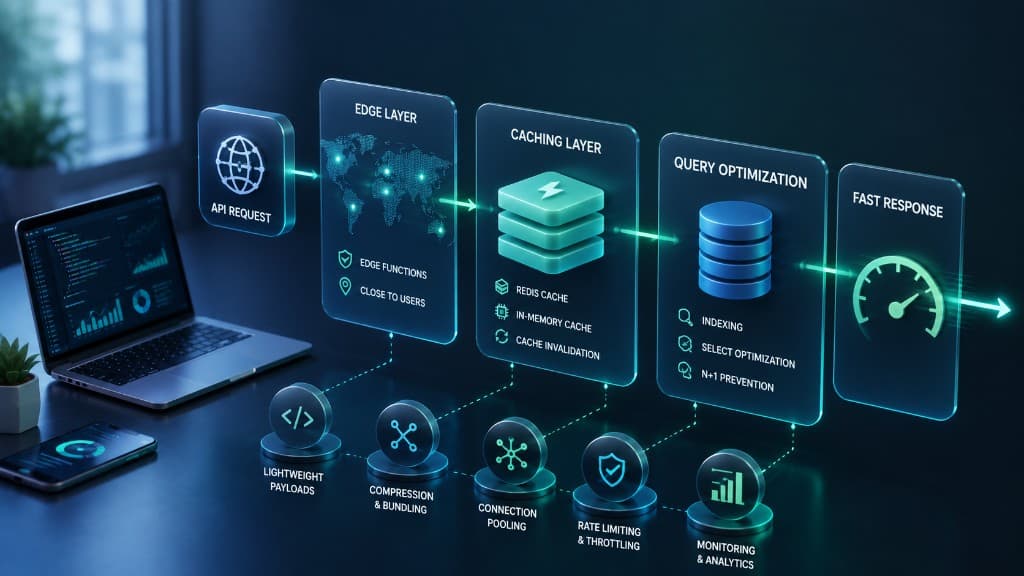
Marketing and SEO pages should lean on server rendering and caching. Authenticated dashboards should fetch with clear loading and error states, and avoid cascading waterfalls of client requests that make every click feel slow.
Document which routes are static, which are dynamic, and which must stay private. That map prevents a later feature from accidentally putting personalised data into a CDN cache or forcing a public page to wait on a session lookup.
For Automative Tech SaaS builds, this fetching map sits next to the product surface document so performance and SEO goals remain explicit as the app grows.
Keep a living ADR log for rendering, auth, and tenancy decisions. Future engineers should not reverse-engineer intent from folder names.
Instrument the paths that pay the bills
Put traces and product analytics on signup, activation, and the core job-to-be-done before you obsess over secondary screens. When those paths regress, you should know within minutes — not after a support spike.
Pair application logs with tenant IDs and request IDs so multi-tenant incidents are diagnosable. Observability is part of custom Next.js SaaS development, not a later ops project.
Keep a living ADR log for rendering, auth, and tenancy decisions. Future engineers should not reverse-engineer intent from folder names.
“Sustainable delivery comes from making the important trade-offs explicit, measurable, and recoverable.”
Checklist
- Critical user journeys mapped before infra deep-dives
- Rendering strategy documented per route group
- Roles, tenancy, and invite flows in the first slice
- AI features share auth, permissions, and cost controls
- Staging parity, migrations, and rollback plan defined
Muhammad Talha Zubair
CTO & Managing Director
Owns technical direction and delivery across web, mobile, and AI integration work. Sets architecture standards and keeps product engineering close to the builders.
Let's build something
remarkable
Whether you need a web or mobile app with AI integrations, blockchain work, or a conversation about our AI products — tell us what you're building and we'll respond fast.
Blog questions
How we write, how often we publish, and how you can contribute or stay in the loop.
Blogs are written by Automative Tech’s engineering leadership — Muhammad Talha Zubair, Bilal Hassan, and Umar Khalid — based on production web, mobile, AI integration, and blockchain work.
We lead with custom web and mobile delivery with AI integrations — Next.js, React, React Native, Flutter, and LLM features. Selected posts also cover blockchain, AI products, and cloud when they support shipping real products.
A few deep pieces per month. We prioritize substance over cadence.
Yes with attribution and a link back to the original. For syndication, contact us for a simple agreement.
Occasionally, when the author has real production experience. Pitch a short outline via the contact form.
Follow the social links in the footer, or contact us to ask about engineering notes updates.