Why Design Systems Are an Engineering Problem (Not Just Figma)

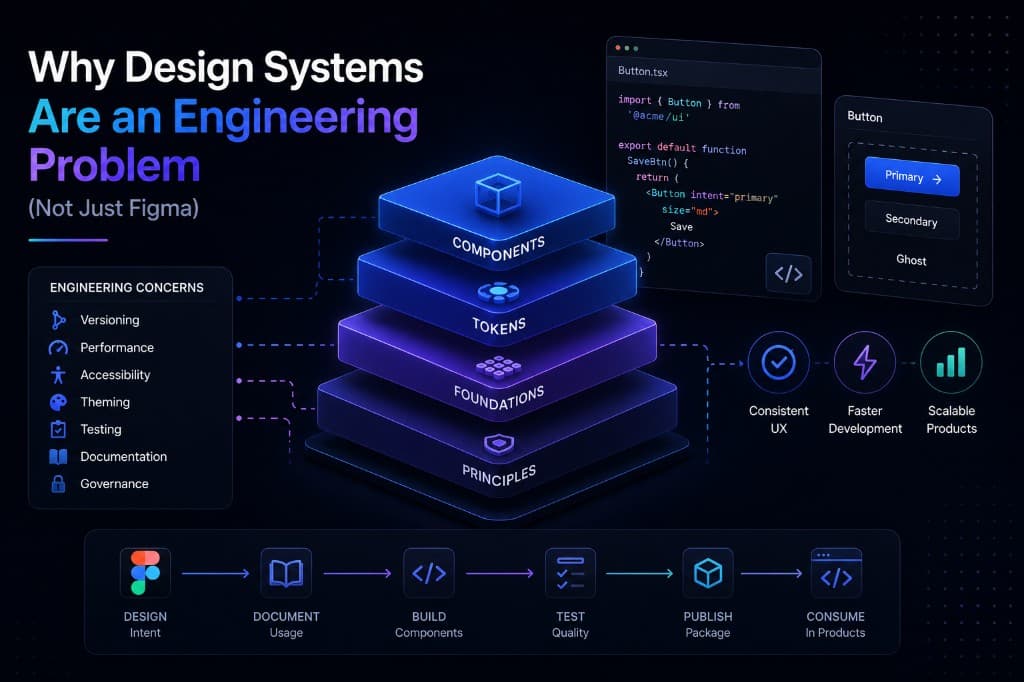
Bridging the gap between Figma components and React codebases for true organisational scale: tokens, theming, accessibility contracts, and release management.
Figma files are not a system
A library of beautiful components in Figma becomes drift the moment engineering ships a one-off variant under deadline. Design systems fail when they are treated as a design deliverable instead of a versioned product with APIs, release notes, and breaking-change policy.
Engineering ownership does not mean designers lose authority over visual language. It means tokens, packages, and accessibility contracts are enforced in CI the same way API schemas are.
Schedule a monthly system office hour where product teams can propose variants. Access reduces shadow UI more effectively than hard bans alone.
Tokens as the source of truth
Colour, space, type, and elevation should live as tokens that compile to CSS variables, iOS assets, and Figma styles from one pipeline. When marketing wants a seasonal accent, you change a token — not forty hard-coded hex values.
We version tokens separately from components so product teams can adopt visual updates without rewriting interaction logic. That separation is what makes theming and white-label work tractable.
Schedule a monthly system office hour where product teams can propose variants. Access reduces shadow UI more effectively than hard bans alone.
Release management for UI
Component libraries need semver, changelogs, and migration guides. A breaking change to Button props is as serious as a breaking REST change because it multiplies across every product surface.
Visual regression tests and accessibility checks on the system package catch issues before they fan out. The teams that scale are the ones who treat the system like infrastructure, not a side project.
Schedule a monthly system office hour where product teams can propose variants. Access reduces shadow UI more effectively than hard bans alone.
Governance without bureaucracy
Contribution paths matter. Product teams should be able to propose variants with a clear review bar: documented use case, token usage, a11y notes, and Storybook coverage.
Rejecting ad-hoc styles without offering a path creates shadow UI. A lightweight RFC process keeps the system coherent without becoming a bottleneck that encourages forks.
Schedule a monthly system office hour where product teams can propose variants. Access reduces shadow UI more effectively than hard bans alone.
Version the system like infrastructure
Ship tokens and components with semver, changelogs, and visual regression gates. Treat a breaking Button API like a breaking REST change.
Design systems scale when engineering ownership enforces accessibility and token contracts in CI — not when Figma alone is called “the system.”
Schedule a monthly system office hour where product teams can propose variants. Access reduces shadow UI more effectively than hard bans alone.
Tokens as the single source of truth
Colour, space, type, and elevation should compile to CSS variables, native assets, and Figma styles from one pipeline. Seasonal accents become token changes — not forty hard-coded hex values.
Version tokens separately from components so teams can adopt visual updates without rewriting interaction logic.
Schedule a monthly system office hour where product teams can propose variants. Access reduces shadow UI more effectively than hard bans alone.
Contribution paths prevent shadow UI
Product teams should propose variants with a documented use case, token usage, a11y notes, and Storybook coverage. Rejecting ad-hoc styles without a path creates forks.
A lightweight RFC process keeps the system coherent without becoming a bottleneck.
Schedule a monthly system office hour where product teams can propose variants. Access reduces shadow UI more effectively than hard bans alone.
“Sustainable delivery comes from making the important trade-offs explicit, measurable, and recoverable.”
Checklist
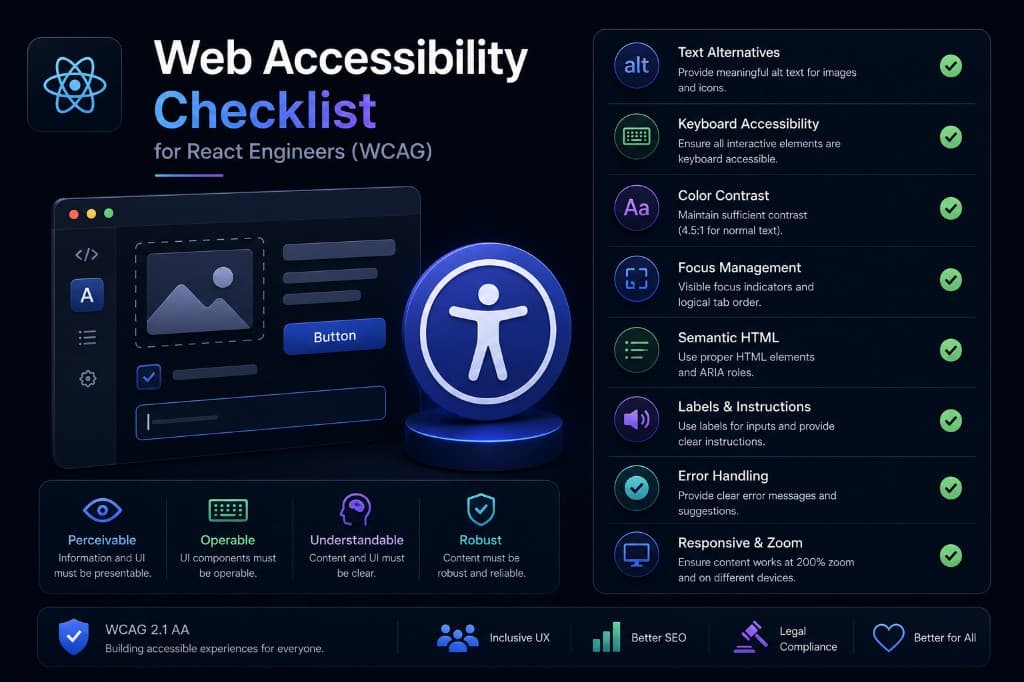
- Semantic structure and keyboard path reviewed
- Focus, error, loading, and empty states designed
- Contrast and accessible names tested
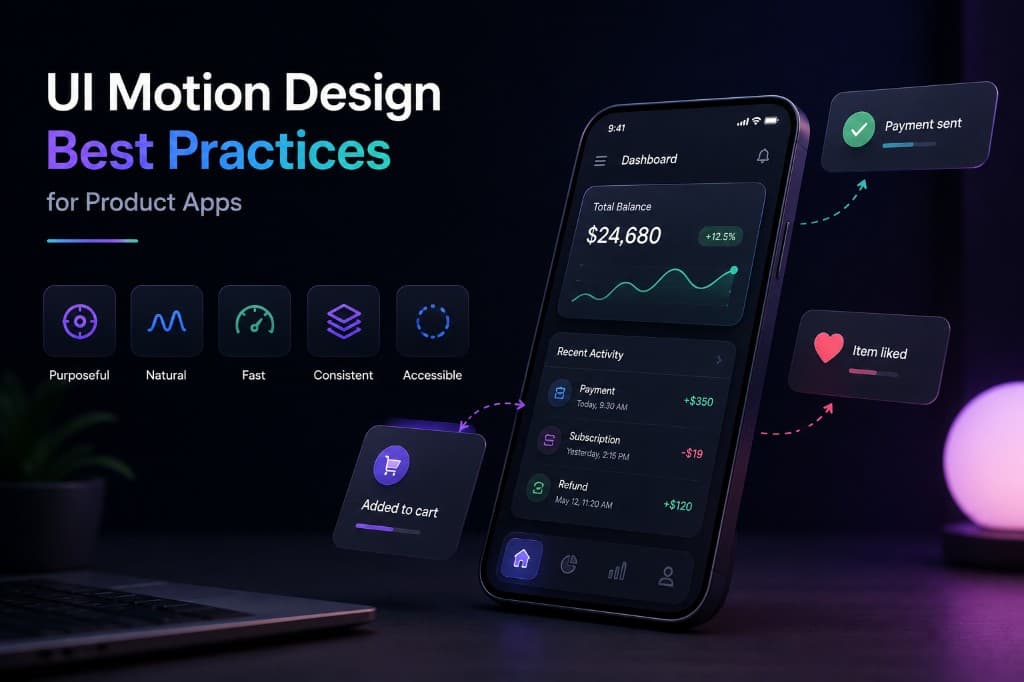
- Responsive and reduced-motion behavior specified
- Reusable component usage documented
- Real-device acceptance checks completed
Umar Khalid
Software Engineering Manager
Manages day-to-day software engineering across APIs, web UI, and AI features — focused on reliable, maintainable production systems clients can own.
Let's build something
remarkable
Whether you need a web or mobile app with AI integrations, blockchain work, or a conversation about our AI products — tell us what you're building and we'll respond fast.
Blog questions
How we write, how often we publish, and how you can contribute or stay in the loop.
Blogs are written by Automative Tech’s engineering leadership — Muhammad Talha Zubair, Bilal Hassan, and Umar Khalid — based on production web, mobile, AI integration, and blockchain work.
We lead with custom web and mobile delivery with AI integrations — Next.js, React, React Native, Flutter, and LLM features. Selected posts also cover blockchain, AI products, and cloud when they support shipping real products.
A few deep pieces per month. We prioritize substance over cadence.
Yes with attribution and a link back to the original. For syndication, contact us for a simple agreement.
Occasionally, when the author has real production experience. Pitch a short outline via the contact form.
Follow the social links in the footer, or contact us to ask about engineering notes updates.